As an educator, I believe we must all continue to develop approaches to English, teaching, resources, and planning that will enable students to continue to thrive in the academic and philanthropic arenas. I believe we must build a strong foundation that exactly and successfully meets the needs of students and educators through collaboration and research. In order to achieve this vision, we must be willing to continually evaluate ourselves and our students; we must also be willing to embrace new challenges.
I believe enthusiasm and enjoyment should pervade the English classroom. Students must be challenged and should make good progress, especially those at either ends of the ability range. I have spent my career developing strategies to teach Gifted and Talented students as well as students who are not successful in a traditional classroom setting. Teaching is an art and in order to truly hone our craft, we must stay current on the literature and the world. The classroom should be a lively and interesting place where students feel challenged to think and encouraged to participate. Teachers should use varied and current resources when teaching and planning lessons, and to update their own knowledge and expertise. Teaching should look a lot like learning. Have we changed how we teach and how we talk about the world over time as the world has changed? Teaching is a process of reflection, discovery, and evolution.
English teachers should be continually evolving as thinkers, teachers, and students of English. Through the use of technology, I envision the classroom as a platform for collaboration and the sharing of ideas and resources between students and colleagues. By doing this, we create a community of learning and of best practices. We have a world of information and ample resources at our fingertips, but we must harness this power to engage students and to empower teachers. Students and resources are rapidly changing, but the need to develop effective communication skills and critical thinking skills is still the goal of education. We must learn to use technology to help students become stewards of learning and creativity. We must embrace the fundamental teaching of the written word. Writing unleashes the power of ideas.
In order to continue to grow as an educator, I must not only have a commitment to best practices, but a commitment to discovering new practices.
As educators, our classroom instruction should seek to engender:
-
knowledge and understanding of language and the power of the written word.
-
lasting awareness of the world around us.
-
sensitivity and empathy towards others.
-
tolerance and independent thinking.
-
preparedness for an active role in an ever changing world.

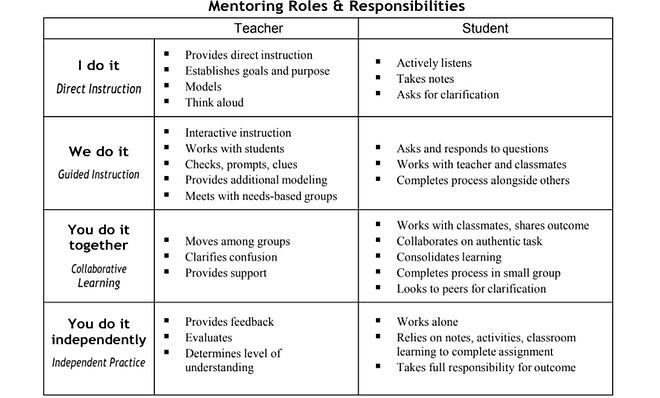
Teaching philosophy
Chart developed by Ellen Leavy and represents the structure of learning in the classroom (ELAchieve 2007).